

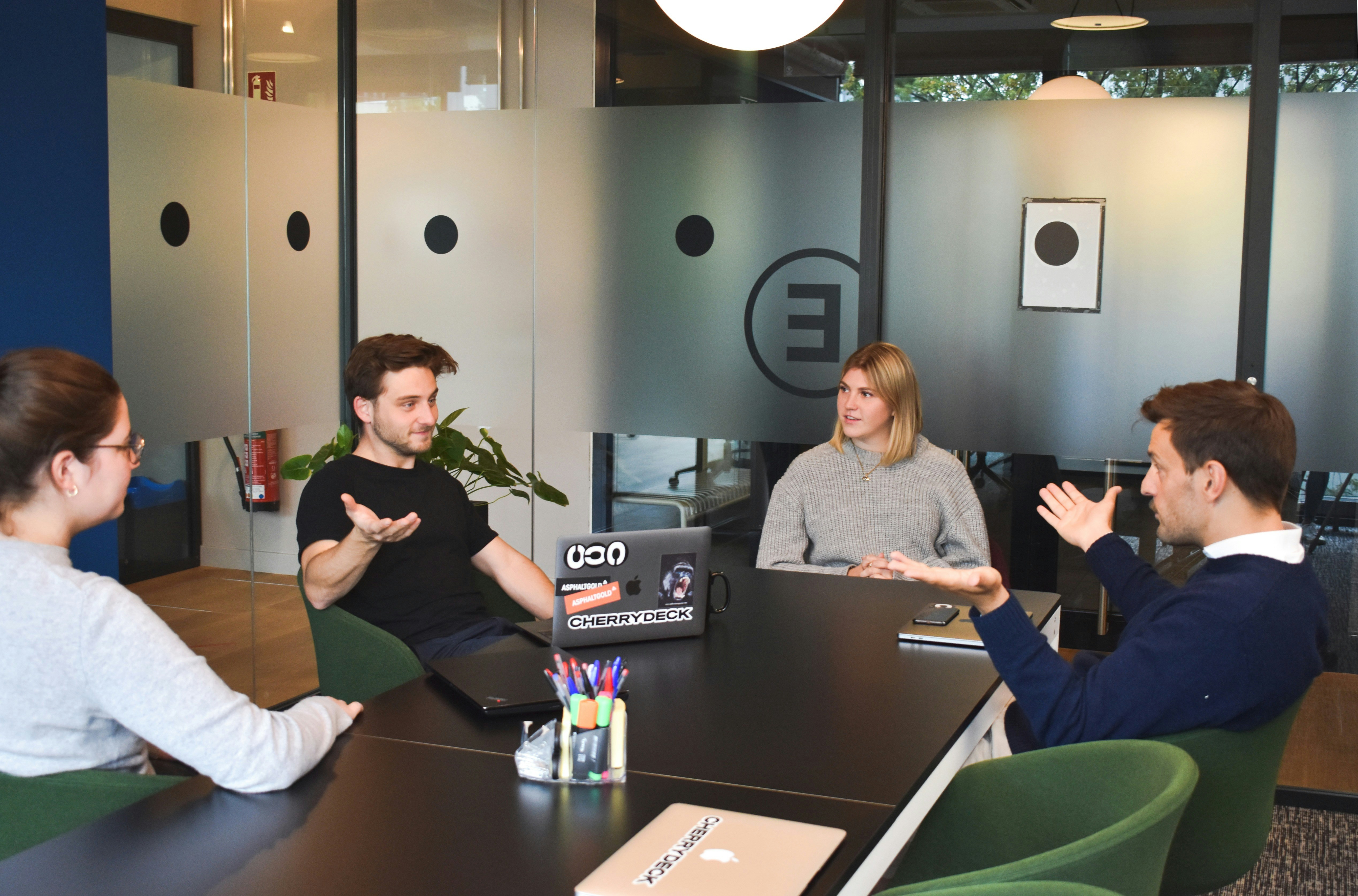
One of the best things to come out of Phase 1? The Knowledge Labs — our hands-on learning model that are up and running across partner universities. A space where students and staff don't just learn about innovation, they actually do it: testing ideas, working across disciplines, and connecting with people outside their academic bubble.
We didn't just dream this up on a whiteboard. The whole model is documented in the Knowledge Lab Toolkit, which spells out how it works, who's involved, and how we keep quality high. It's built on learning-by-doing and real-world challenges — exactly what's needed to grow entrepreneurial thinking in the Cultural and Creative Industries.
How it works
The Knowledge Lab mixes online and in-person learning, combining structured courses, mentoring, and real project work — so ideas don't stay theoretical for long. It's built around four pillars:
- Learning by doing, through real projects
- Working across disciplines
- Getting mentored by academics and industry experts
- Keeping digital, green, and social priorities front and centre
In practice, that means 60 hours of interactive learning plus 10 hours of one-on-one mentoring, mixing live sessions with self-paced work. Participants dig into: Understanding and generating ideas in the creative industries.
- Building a creative business from the ground up
- Managing growth and staying financially sustainable
- Turning a concept into an actual business plan
Rolling it out across partner universities
This wasn't just theory — partner HEIs actively launched the Knowledge Lab locally, putting out open calls to students and early-stage innovators in the creative industries. Every call was clear about what participants could expect and what they'd walk away with.
To make it work for everyone, we combined:
- Hybrid delivery (join online or in person)
- Structured mentoring sessions
- Cross-institution, cross-discipline project work
This let each university adapt the Knowledge Lab to their own context, while staying true to the shared project vision. The result: over 400 students trained across our partner network — real proof that the model works at scale. We also built a dedicated online learning space, so everything — training materials, guides, templates, self-paced activities — lives in one place. That means anyone can access it anytime, from anywhere, and the knowledge doesn't disappear once a workshop ends.
Why it matters
Beyond the training itself, the Knowledge Lab has helped partner universities:
- Weave innovation-focused teaching into their existing programmes
- Build stronger entrepreneurship and innovation skills among staff and students
- Test new ways of collaborating across institutions and borders